Our Location
304 North Cardinal St.
Dorchester Center, MA 02124
 Want early access to our natural fragrance rituals? 👉 Join our scent circle for exclusive launches & offers! DismissSkip to content
304 North Cardinal St.
Dorchester Center, MA 02124

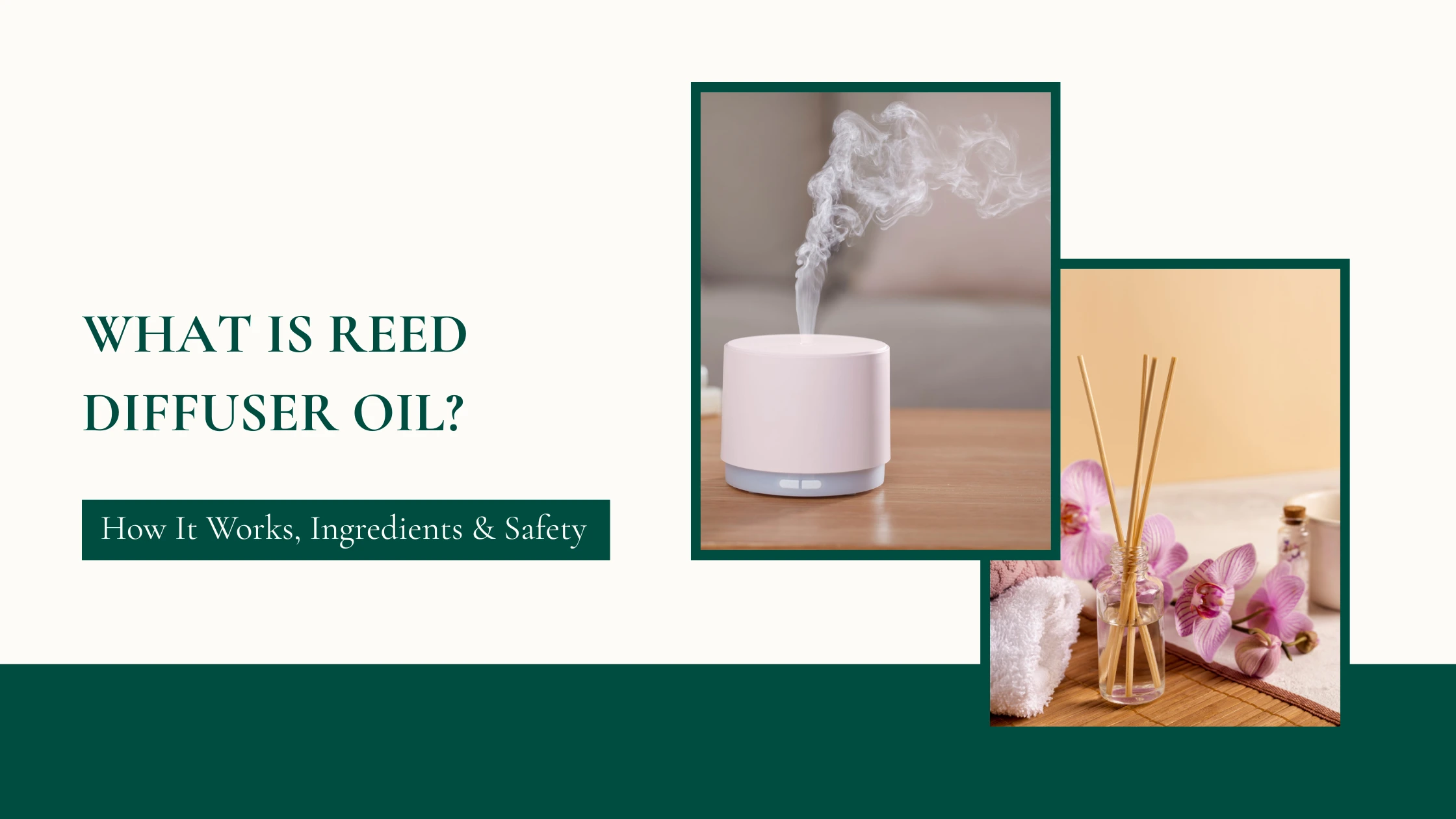
Reed diffuser oil is a specially formulated scented liquid designed to travel up porous reeds and gently release fragrance into the air without heat, flames, or electricity.
It’s made to provide a continuous, low-maintenance way to scent a room while maintaining balance, safety, and longevity.
This article explains exactly what reed diffuser oil is, how it differs from essential oils, what ingredients matter most, and how to use it properly if you care about a tasteful, elevated home atmosphere.
A home’s atmosphere is shaped as much by scent as it is by light, texture, or décor.
Fragrance influences mood, memory, and the way a space feels the moment someone walks in. Reed diffusers appeal to women who want their home to feel polished and intentional without the effort, soot, or safety concerns of candles.
Reed diffuser oil matters because it determines whether a space smells refined or artificial, subtle or overpowering. A well-formulated oil creates a steady background scent that becomes part of the home’s identity rather than something you notice only when it’s lit or turned on.
Unlike sprays or plug-ins that release fragrance in bursts, reed diffuser oil works continuously. That consistency is what makes formulation quality, placement, and maintenance especially important.
Reed diffuser oil is a blended fragrance liquid engineered for passive diffusion. When reeds are placed into the bottle, the oil moves upward through microscopic channels in the reeds via capillary action, then slowly evaporates into the air, carrying scent with it.
Unlike essential oils used in burners or electric diffusers, reed diffuser oil is balanced for:
Educational explanations of capillary action in porous materials show why untreated rattan reeds are so effective at drawing liquid upward and dispersing it evenly into the air.

Reed diffusers rely on a simple but effective physical process:
Scientific explanations of capillary action in porous materials help explain why untreated rattan reeds perform best.
Their internal structure allows oil to travel upward evenly, creating a consistent scent release instead of sudden bursts.
From personal experience testing diffusers in real homes, oil viscosity plays a critical role. Oils that are too thick struggle to climb the reeds, while oils that are too thin evaporate quickly and lose balance. The best reed diffuser oils are carefully calibrated to move steadily without rushing.
Placement also affects performance. Areas with gentle airflow—such as near entryways or open shelves—allow scent to disperse naturally without becoming overwhelming.
Reed diffuser oil is usually made from three main components, each chosen for performance rather than trend appeal.
Most reed diffusers rely on fragrance oils, which may include natural extracts, essential oil constituents, and safe synthetic aroma molecules. Fragrance chemistry resources explain that these blends are designed for stability, controlled evaporation, and consistency over weeks or months.
High-quality fragrance oils are formulated to smell balanced from the first day to the last. Poor-quality oils often smell sharp at first and then fade quickly or develop off-notes.
Some diffuser oils include essential oils for complexity or a more natural profile, but they are almost always blended rather than used alone. Research into essential oil volatility shows that many essential oils evaporate unevenly or too quickly when used without modification.
This is why even “natural” reed diffusers typically rely on blended formulations rather than pure essential oils.
Carrier bases such as DPG or plant-derived diffuser solvents are used to control evaporation speed and scent throw. Industry safety documentation shows these carriers are selected because they are low-odor, stable, and effective at transporting fragrance without altering the scent itself.
The carrier is what determines whether a diffuser lasts weeks or burns out in days.
| Feature | Reed Diffuser Oil | Essential Oil |
| Purpose | Passive room fragrance | Aromatherapy, topical, or active diffusion |
| Longevity | Weeks to months | Short-lived without heat or mist |
| Scent Throw | Consistent and controlled | Often weak or uneven |
| Safety | Formulated for ambient use | Can be irritating if misused |
| Cost Efficiency | Long-lasting per bottle | Expensive for passive diffusion |
Aromatherapy research consistently notes that essential oils have high evaporation rates, which is why they perform best in ultrasonic or heat-based diffusers rather than reed systems.
On average, a properly formulated reed diffuser lasts:
Longevity depends on several factors:
Warm rooms and direct sunlight increase evaporation. Using all the reeds at once increases scent strength but shortens lifespan. From hands-on experience, using fewer reeds in smaller rooms often creates a more refined scent while extending oil life. For a deeper breakdown of lifespan variables and room-by-room expectations, this section can internally link to a dedicated guide on how long reed diffusers last.

Short answer: usually no.
Pure essential oils are not designed for passive diffusion. They are often too thick, evaporate unevenly, or stop traveling up the reeds altogether. Aromatherapy references on essential oil behavior explain that many oils oxidize quickly when exposed to air continuously.
If someone chooses to experiment, heavy dilution with a proper diffuser base is necessary, but performance is still unpredictable.
For a detailed guide on how to safely dilute essential oils, see our DIY essential oil reed diffuser guide.
Reed diffusers are generally safer than candles or heated diffusers, but scent sensitivity still matters. Veterinary safety organizations note that cats and dogs can be sensitive to certain essential oils, especially in poorly ventilated spaces.
Best practices:
Common reasons include:
Simple fixes:
In real-world testing, replacing reeds often restores scent more effectively than adding more oil.
Through repeated use across bedrooms, entryways, powder rooms, and living spaces, the most important lesson is restraint. Reed diffusers perform best when they become part of the environment rather than the focal point.
Practical insights from real use:
Tasteful fragrance is about consistency, balance, and subtlety. When done correctly, a reed diffuser should make a room feel complete, not scented.

 Optimized by Seraphinite Accelerator